
American interest in Portugal has grown steadily over the past few years, and a share of that interest has now reached the central-east Algarve. Buyers from the United States who once looked only at Lisbon or the Silver Coast increasingly ask about the quieter stretch around Olhao, where a larger character house costs less than a comparable coastal villa further west. The decision to relocate rarely turns on the property alone. It usually rests on three practical questions, namely how healthcare works, which visa applies, and where the children will go to school.
This piece sets out how those three factors stand in 2026 for an American household weighing a move to Olhao, Fuseta or Moncarapacho. None of it replaces advice from an immigration lawyer or a Portuguese accountant, and the figures quoted here should be checked against the official sources before any application. What follows is the context a buyer needs in order to shortlist sensibly rather than on first impressions alone.
Why Americans Are Looking at the Central-East Algarve
The appeal of this area is partly cost and partly character. Olhao is a working fishing town with a daily market, a walkable centre and ferries out to the Ria Formosa islands, and it sits right next to Faro, the district capital, with its airport and its main hospital. Fuseta pairs a lagoon beach with a slower pace, while Moncarapacho offers rural quiet a short drive inland. For an American buyer, the draw is a genuine Portuguese town rather than a resort built around foreign owners.
Prices here still trail the western Algarve. Figures reported by idealista put the wider Faro area in the region of 3,400 to 3,600 Euros per square metre in early 2026, and the three towns sit around or below that band depending on the street and the state of the house. Treat any per square metre figure as our own reading of the market rather than a formal valuation, since a restored townhouse near the water and an inland quinta are very different propositions.
The Visa Routes That Apply to Americans
Americans are non-EU citizens, so a stay beyond the ninety-day limit needs a residence visa. The two routes that fit most relocating households are the D7 passive-income visa and the D8 digital-nomad visa. The D7 suits retirees and anyone living on pensions, rental income or dividends, and in 2026 a single applicant is generally expected to show passive income of around 920 Euros a month, a figure tied to the Portuguese minimum wage and rising with it. The D8 suits remote workers and the self-employed, and asks for a higher monthly income of roughly 3,680 Euros for a single applicant.
Both routes are now handled by AIMA, the agency that replaced the former border service in 2023, and processing times and exact thresholds change often, so confirm the current figures before you apply. One point worth noting is that the old Non-Habitual Resident tax regime closed to new entrants in 2024, so it should not form part of your planning, and the property route to the Golden Visa closed the year before. Residency now rests on the ordinary visa routes rather than on buying a house.
Healthcare for Residents and Residency Applicants
Portugal runs a public health system, the Serviço Nacional de Saúde, alongside a substantial private sector. Once you hold residence and register, you can use the public system, but residency applicants are normally asked to show private health insurance when they first apply, and many residents keep a private policy afterwards for speed and for English-speaking care.
For the Olhao area the main public hospital sits in neighbouring Faro and now forms part of the reorganised Unidade Local de Saude do Algarve, the local health unit created in the 2024 reform of the national service. Private hospitals and clinics operate in the Faro area as well, so a family settling in these three towns has both options within a short drive. Day-to-day care runs through the local health centre in Olhao and the surrounding parishes.
Schooling and the Commute to International Classrooms
State and private Portuguese schooling is available locally, and younger children often settle quickly into the Portuguese system. Families who want an English-language or British-curriculum education usually look towards the cluster of international schools around Faro and the central Algarve, including long-established schools in the Almancil and Loule direction. From Olhao, Fuseta or Moncarapacho that means a daily commute rather than a school on the doorstep, and eastern-Algarve families routinely make that trip.
There are also two excellent Portuguese private schools close by, one in Olhao and the other in Faro. If your long-term plan is for the children to stay in Portugal and go on to university here, a Portuguese school can be a particularly good choice. It helps them build stronger Portuguese, make local friendships and integrate more fully, which gives them a real sense of belonging and makes the move into higher education and adult life here far more natural.
The honest position is that international schooling is not on your street in these towns, so the drive matters when you choose where to live. A house in Olhao with easy access to the Faro road, or one in Moncarapacho close to the main routes, keeps the school run manageable across the year.
Settling Into a Character House
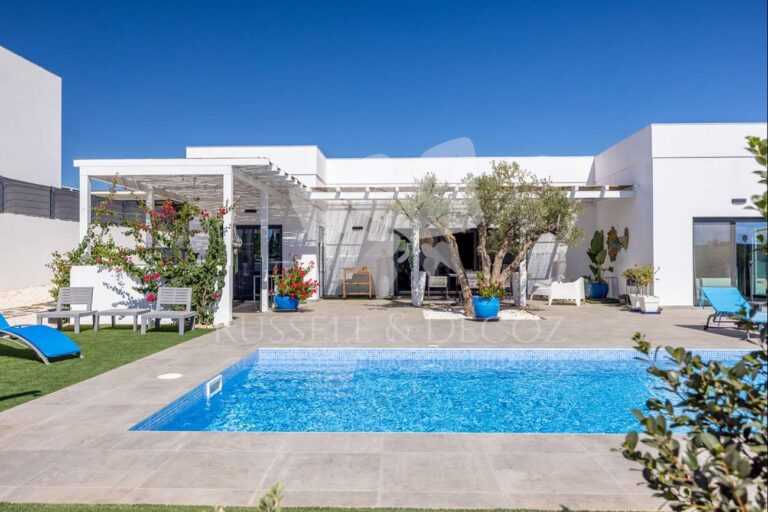
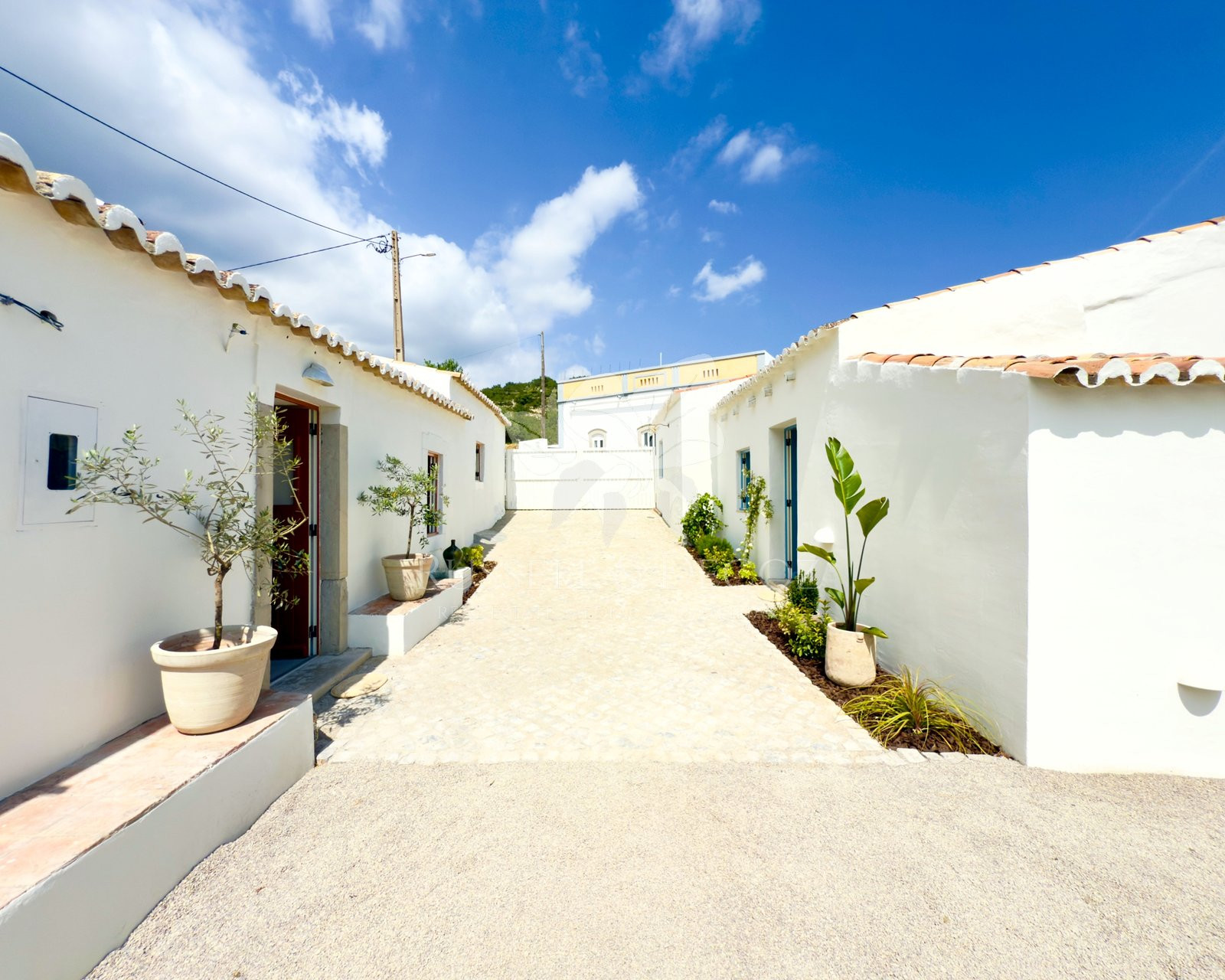
The homes on our books here are larger character single dwellings rather than apartments, meaning character townhouses in the old quarters, restored single houses and quintas on the edge of town. For a relocating family that style suits full-time living, with room to work from home, space for visiting relatives and, in the case of a quinta, land for a garden. A standalone house also sits outside the condominium rules that govern an apartment block, which keeps ownership simpler.
Acquisition costs for a non resident buyer typically run around nine to eleven per cent of the price, taking in the IMT transfer tax, stamp duty and legal fees. IMT changed in May 2026 under Decreto-Lei 97/2026, and residency now drives the rate. It is charged on the higher of the price or the rateable value, and because relocating Americans are not yet Portuguese tax residents when they buy, they generally pay a flat 7.5 per cent from the first Euro, with the usual reductions set aside. That flat rate falls away only where the buyer is already a Portuguese tax resident, becomes one within two years of the purchase, or lets the home long term at a capped moderate rent of around 2,300 Euros a month, in which case the progressive scale applies instead and the 7.5 per cent rate is reached only above roughly 1,150,000 Euros. Your own lawyer handles the due diligence and a Portuguese tax lawyer can confirm the exact figure for your specific purchase.
Planning the Move Before You Buy
A relocation works best when the house, the visa and the school run are lined up before an offer rather than after completion. Settle the visa route with an immigration adviser, confirm your healthcare cover, and map the commute to whichever school you have in mind, then let the shortlist follow from there.
When you are ready to look at Olhao property for sale that fits a full-time move, Russell and Decoz can focus the search on character houses in Olhao, Fuseta and Moncarapacho that suit the way you plan to live. We handle the sale and the viewing programme, while the legal and tax work stays with your own advisers, so you reach an offer already clear on how healthcare, residency and schooling will fit together.